Open House, Not Opening Night: Twenty Guests, a Loose Script and a Plan
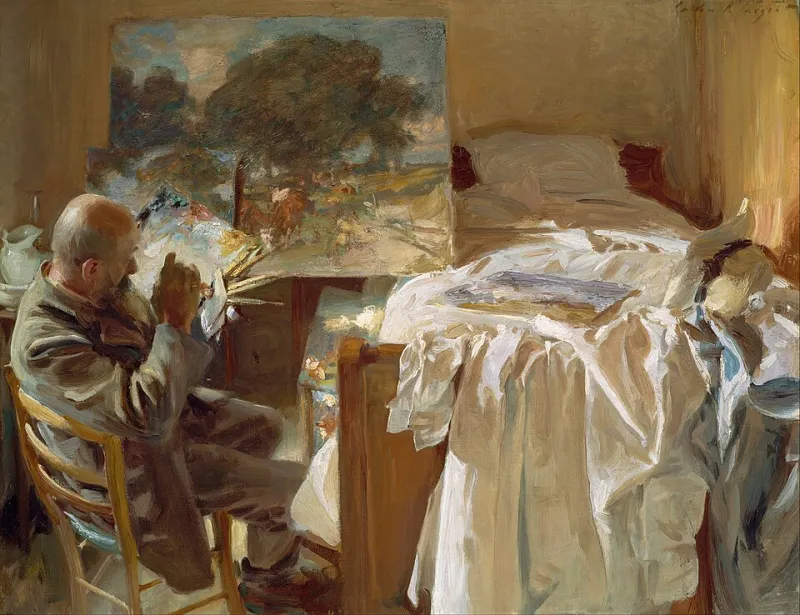
Photo: John Singer Sargent, Public domain, via Wikimedia Commons
The first time I opened the studio to strangers I spent a fortnight worrying about canapés and about nine minutes thinking about who was coming. Guess which part mattered.
An open studio is not a party. A party is a success if people have a nice time. An open studio is a success if, three weeks later, two people who came through the door are talking to you about work. Everything below is designed around that second definition, because it's the one that keeps the lights on.
What this isn't
It isn't a launch. There's no ribbon, no speech, no press release, no photographer circling the room making everyone self-conscious. It's closer to a very good Tuesday evening in a room that happens to have your work in it.
It also isn't expensive. My last one came in under a hundred and forty quid, most of it on wine, crisps and a stack of paper cups. The rest was printing.
Twenty people, three buckets
Twenty is the right number for a space the size of a normal UK studio — enough to feel busy, few enough that you can have a proper conversation with everyone. Split the list like this:
- Eight people who already pay you. Past clients, current ones, the person who booked you for that thing in 2023. They're the easiest yes and the most likely to refer.
- Eight who nearly did. People who enquired and went quiet, got a quote and went with someone cheaper, or met you at a screening and said 'we should talk'. This is the whole point of the exercise.
- Four wildcards. Someone from the local arts centre, a programmer at the independent cinema, the printer who's been doing your boards for three years. Not prospects — connectors. They know forty people each.
Send individual messages, not a Mailchimp blast. One line: what it is, when, what's on the walls, and 'no pressure to stay long'. Expect roughly half to say yes. That's fine; twenty invitations is really about ten to fourteen bodies, which is the correct amount of noise for a small room.
The walls
Resist the urge to show everything. The temptation is a retrospective; the useful thing is an argument.
I put up three finished pieces — the three that best explain what I do to someone who's never hired anyone like me. Then one unfinished thing, taped up with the notes still on it, because that's the bit people ask about. Then a process wall: rejected layouts, a marked-up script, a printed email thread with the client name redacted.
The process wall is the whole event. People who don't work in creative industries genuinely don't know what they're buying, and the rejects explain it faster than you can.
One thing I keep in a drawer rather than on the wall: a single sheet with my day rate and typical project ranges on it. If someone asks, I can hand it over and it doesn't feel like a price list stapled to the door.
A loose running order
- 6.45pm — you, alone, moving the bin out of shot and putting the good lamp on.
- 7pm to 8pm — people arrive. Stand near the door, not behind your desk. Introduce people to each other; that's most of your job for the first hour.
- 8pm — thirty seconds of speech. Thank people for coming, point at the unfinished thing, say 'ask me about anything on that wall'. Then stop talking.
- 8pm to 9.15pm — the actual conversations. Aim for depth with six people rather than a handshake with twenty.
- 9.15pm — one person will still be there. That person is usually the most interesting outcome of the night. Don't rush them.
- 9.30pm — lights down, bin back where it belongs.
Collecting details without a clipboard ambush
Don't stand at the door with a sign-in sheet. It turns a warm room cold in about four seconds.
Instead: a single sheet of A4 on the table by the wine with a pen and the words 'If you'd like the occasional studio note, put your email here.' Roughly half will. Those are the half who want to hear from you, which is worth more than a full list of polite captives.
Keep the business cards you're handed in one pocket and write on the back of each, that night, what you talked about. Memory does not survive a Thursday.
The seven-day follow-up
This is where open studios die. A lovely night, then silence, then vague guilt.
Three touches, all short:
- Next morning. A single email to everyone who came. Thank you, one photo, one link to a thing you mentioned. No ask.
- Day three. Individual messages to the six people you actually clicked with. Reference the specific conversation. If there's an obvious next step, name it in one sentence.
- Day ten. An open offer: 'If it'd help to see how a project like yours works start to finish, I'll send you the paperwork from a recent one.' Weirdly effective. Nobody else does it.
Then stop. Three touches, then it's their move.
What counts as a win
Not attendance. Not compliments. The scoreboard is: how many follow-up conversations started, and how many turned into a quote within eight weeks.
My last one: eleven people, four real conversations, two quotes, one job. That's a decent night's work for a Tuesday and a hundred and forty quid.