Half-Time Oranges: Scheduling the Pause a Long Project Deserves
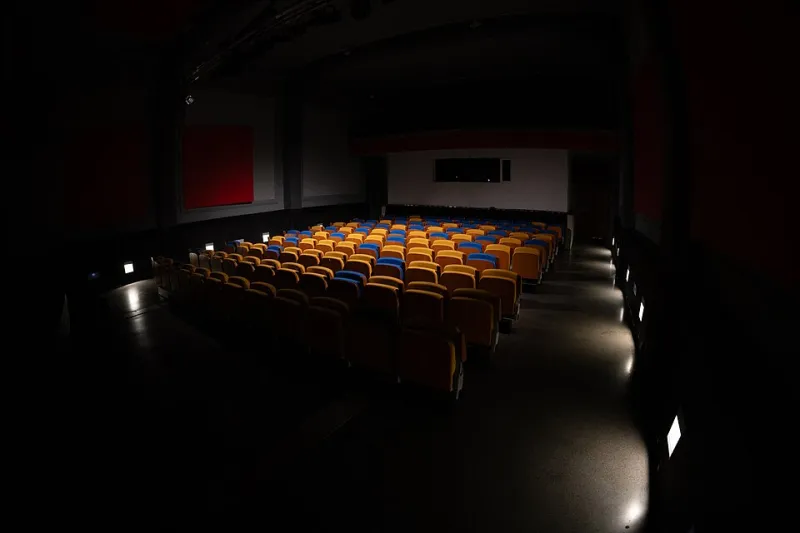
Photo: JJxFile, CC BY-SA 4.0, via Wikimedia Commons
There is a point in every long project where momentum starts doing the job of judgment. You are still moving, still ticking things off, still sending the Friday update, and somewhere in the middle of it nobody has asked whether the thing is actually any good. That is usually the moment to book an interval.
Not a collapse. Not a quiet fortnight where you answer emails with one hand and feel guilty with the other. A proper, scheduled pause with a start date, an end date and a handover. The kind of break that theatre builds into the evening because it knows an audience needs to stand up, stretch and come back able to concentrate again.
The interval is not a cancellation
In the UK we are quite good at accidental breaks. The August lull, the week between Christmas and New Year, the client who goes quiet because their finance team has disappeared. None of those are intervals. They are weather. An interval is deliberate, and that is the whole difference.
If a project is going to run for more than eight or ten weeks, put the pause in the schedule at the start. Give it dates. Tell the client or collaborator. Make it look as boring as a delivery milestone, because that is exactly what it is. A project without a planned pause tends to take one anyway, usually at the worst possible moment, usually disguised as exhaustion or a sudden loss of confidence.
A scheduled interval does something else too: it gives everyone permission to stop pretending that constant visibility is the same as progress. For a studio of one, that matters. You cannot see your own work clearly while you are still holding it.
Decide what the break is for before you take it
A pause with no purpose becomes a slow slide into admin. Before you stop, write a short note — half a page is plenty — answering three questions: what should be true when we come back, what are we deliberately not deciding until then, and what would make us change course?
That last one is the useful one. If you cannot name what would count as evidence that the project needs a rethink, you are not taking a break. You are just avoiding the question for a fortnight.
Pack the handover like you are leaving the country
The worst intervals are the ones where you spend the first three days back reconstructing what you were doing. Avoid that by handing the project over properly — to your future self, to a collaborator, or to the client if they are the ones holding the thread.
Keep it short. A one-page state of play, a clear index of where the current files live, a list of open questions, and no more than three things to test when the work starts again. Do not tidy the whole archive. Do not reorganise the folders as a displacement activity. The handover is not a museum; it is a set of instructions for restarting.
If other people are involved, say who is on call and for what. If it is just you, set the out-of-office to say when you are back and what happens next, not simply that you are away. Vagueness creates low-level anxiety for everyone, including you.
Let the work sit in a different room
Distance is the point of the exercise. Not distance for its own sake, but enough distance that you can look at the thing without your own commentary running over the top of it.
When you come back, do not open the file first. Read the handover. Then spend one hour with the work and make notes only — no fixes, no improvements, no quiet panic-editing. You are looking for whether the structure holds without you explaining it. If you find yourself writing “this will make sense once the client sees the next section”, that is not a note. That is a warning.
A second pair of eyes helps, but frame the ask. Do not say “what do you think?” Say “does the middle section earn the ending?” or “can you tell what this is for by minute three?” You will get a much more useful answer, and you will not have to pretend that vague praise is data.
The first hour back is not a sprint
The return is its own small craft. Read the handover before the work. Compare what you expected to be true with what is actually there. Then decide, explicitly, whether you are continuing, cutting or changing. Write that decision down. It stops the next two weeks becoming a negotiation with your own memory.
And then book the next interval. Long projects are not improved by one heroic pause. They are improved by a rhythm: work, stop, look, return, work. The break does not make the project longer in any way that matters. It makes the second half possible.
In theatre, nobody thinks the interval is a failure of the play. It is part of how the evening is built. The same should be true of the work we make in a studio, a spare room or a rented desk above a shop. Put the oranges on the table. The game is not over.