Nobody Briefs a Calculator: Keeping Creative Authority in an AI-Assisted Studio
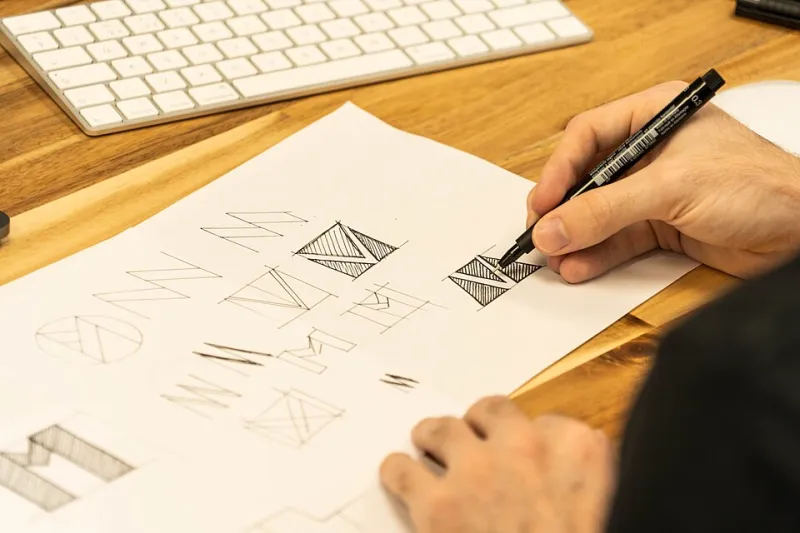
Photo: Claireneon, CC BY-SA 4.0, via Wikimedia Commons
There's a new genre of email in my inbox. The subject line reads something like 'Brief — v1 (for discussion)' and attached are three pages of machine-written notes, a mood board pulled from someone else's Pinterest, and one line at the bottom: 'Let me know what you think?'
I do know what I think. That isn't a brief. That's a draft of enthusiasm.
None of this is an argument against the tools. I use them most days — for transcription, for first-pass alt text, for turning a rambling voice note into a bullet list I can then argue with. But somewhere in the last couple of years the trade has quietly started treating the output of a prompt as the beginning of a project, and that mix-up is expensive. Usually for the person paying.
A prompt asks for material. A brief makes decisions
This is the distinction I keep coming back to. A prompt is a request: give me some options, some names, some copy, some shapes. A brief is a set of commitments: who this is for, what it has to do, what we are deliberately not doing, and what 'good' looks like on this particular job.
When a client sends me a page of generated text and calls it the direction, they haven't briefed me. They've handed me raw material and left all the decisions unmade. My first two days then go on reverse-engineering the choices nobody was willing to make out loud. That work is real, it's skilled, and it's almost never in the quote.
So I've started refusing the framing politely. The line I use now: 'Happy to work from this, but I need the five answers underneath it before I can tell you whether it's any good.'
What an AI-ready brief actually looks like
Funnily enough, the brief that works best with a machine is the same brief that works best with a human. It's just less forgiving of vagueness, because a person will ring you to ask and a tool will cheerfully invent an answer.
Mine is one side of A4, and it has six slots:
- The problem in one sentence. Not 'we need a video'. Something like: 'People book one session at our climbing wall and never come back, and we don't know why.'
- Who it's for, and who it isn't. Two named groups beat 'young professionals' every time.
- What we're not doing. The most useful line on the page. It stops four wild goose chases before they start.
- Two references and one anti-reference. The anti-reference does more work than either of the others.
- The decision. Who signs it off, and by when.
- The honest constraint. Budget, deadline, or the fact that the chief exec's nephew is doing the logo.
Feed that to a tool and you get something usable, because you've given it edges. Feed it 'make it pop' and you get the beige soup we're all swimming in.
Where I stop handing things over
My own line is roughly this: tools can draft, sort, summarise, transcribe and suggest. They don't get to decide, and they don't get the credit.
In practice that means generated material never goes to a client as a deliverable. It goes into the bin beside my desk, mentally, and comes out as notes I've argued with. If a first pass saves me an afternoon, brilliant — but the thing that leaves the studio has my judgement in it, or it doesn't leave.
There are also jobs where I keep the tools out of the room entirely: anything involving a real person's story, anything with a named contributor's likeness, and anything where the client is paying for a point of view. If the whole value of the work is taste, outsourcing the tasting is a strange way to earn a living.
Keeping the human bits visible
Three small habits, none of them dramatic.
Write the reasoning down. Every project note now carries a short paragraph on why we made the choices we made. It takes ten minutes and it's the difference between a portfolio and a pile of files.
Credit people properly. If a tool drafted the first pass of a shot list, that's fine, and the end credits still say who cut it, who lit it, who said no to the third idea. Provenance is not admin; it's the record of a career.
Show the taste in public. The posts that do best for me are the ones with a rejected version in them and a sentence about why it was binned. Machines don't bin things. That's still the job.
What clients are actually buying
Not output. Output is cheap now, and getting cheaper. They're buying someone who can look at forty plausible options and tell you which eleven are wrong, and why, in plain English, without needing a second meeting to think about it.
That's the bit I'd defend in 2026 and every year after. The prompt is a starting gun. The brief is the race. And somebody in the room still has to know where the finish line is.