The Unglamorous Ten: Habits That Carry a Creative Practice Through the Quiet Months
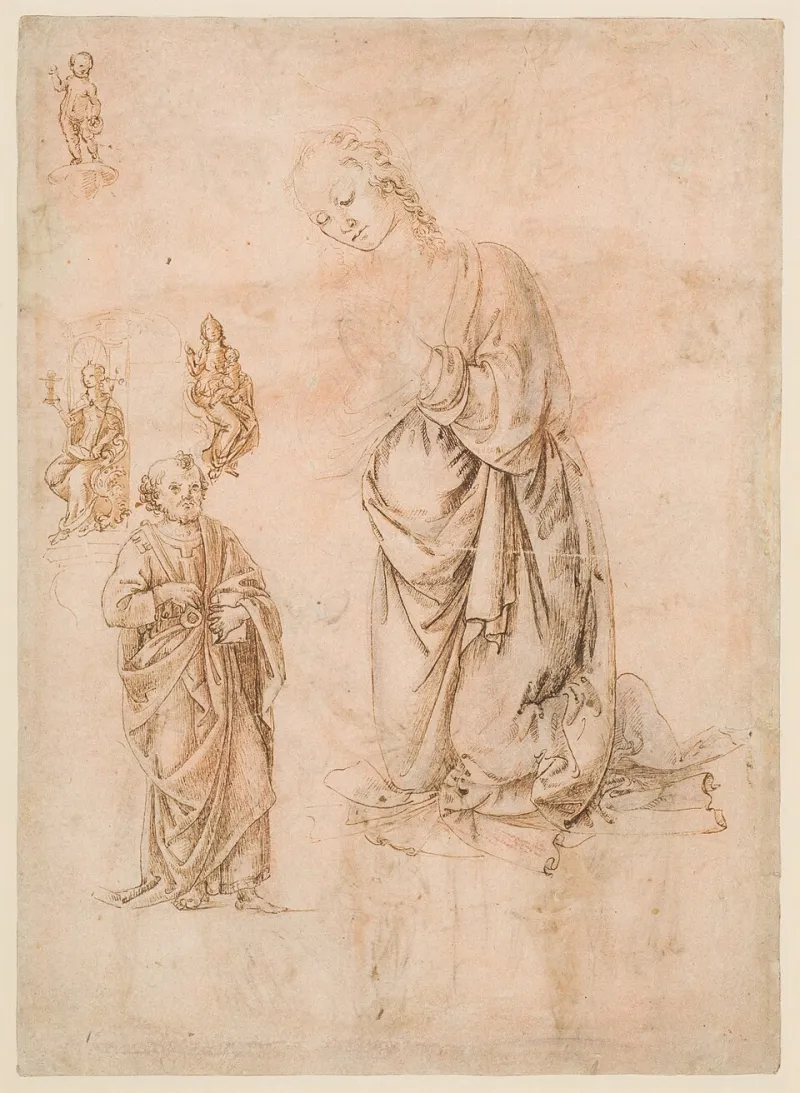
Photo: Simone Ferrucci, Public domain, via Wikimedia Commons
The quiet months are not a failure of ambition. They are a season. But they are also where a practice either compounds or corrodes. The habits below are not productivity hacks. They are small, repeatable defences against three specific things: stagnation, over-polish, and the slow poison of waiting to be asked.
The Monday sketch hour
Every Monday, 9am to 10am, I draw or write badly on purpose. No client, no brief, no audience. The rule is that nothing from that hour has to become anything. It protects against waiting to be asked because it makes the act of making independent of permission. By the time a brief arrives, the engine is already warm.
The deliberately bad draft
When a project feels too precious, I write the worst possible version first. The cliché, the obvious joke, the design that looks like a 2008 estate agent flyer. It protects against over-polish, which is often fear wearing a nice jumper. Once the bad draft exists, the good draft has something to push against.
The walk that ends at a charity shop
Not a run. Not a podcast walk. A slow one, ideally to a charity shop where I buy one object for under £3: a mug, a manual, a cassette. The object is not the point. The point is the unoptimised hour. It protects against stagnation by refilling the part of the brain that notices things without trying to monetise them.
The notebook nobody reads
A cheap pocket notebook, the kind from Ryman with an elastic band. I write down overheard sentences, colours, bus numbers, the name of a road. I almost never look at it again. It protects against forgetting that observation is a craft, not a content strategy. The notebook is a muscle, not an archive.
The Friday delete
Ten minutes on Friday afternoon: delete ten files, ten emails, ten old versions. It protects against clutter, which is stagnation with better branding. A tidy desktop is not a personality, but it does lower the friction of starting on Monday.
The one-hour skill drill
One hour a week on a single technical thing — colour grading, kerning, a new keyboard shortcut, how to record clean audio in a kitchen. It protects against atrophy. The briefs will not teach you the thing you are avoiding; they will only ask you to use it.
The local cafe critique
Take one unfinished thing to a cafe and show it to one person who is not your client. Not for approval. For a sentence. It protects against isolation and the echo chamber of your own taste. The best note I got last year came from a friend over a flat white in Leeds, and it was three words long.
The 20-minute tidy
Not a deep clean. A reset. Wipe the desk, put the pens back, clear the cups. It protects against friction. A studio that looks like a bomb site is a studio that says come back later. Later never comes.
The monthly dead-brief autopsy
Once a month, I open a project that did not go well and ask three questions: what was the brief, what was the actual brief, and where did I stop listening? It protects against repeating the same mistake with a different logo. It is not fun. It is cheaper than therapy.
The no-audience experiment
One small thing a month that nobody will see. A zine for the drawer. A song for the hard drive. A poster for a wall that does not exist. It protects against performance pressure, which is the cousin of waiting to be asked. If you make something that cannot be judged, you remember why you started.
None of these are impressive. That is the point. The rituals that keep a practice alive are not the ones you can put on a website. They are the ones you do on a wet Tuesday in November when nobody is asking. The briefs come and go. The habits are the practice.