Show Your Working: Building a Portfolio That Survives Every Algorithm Change
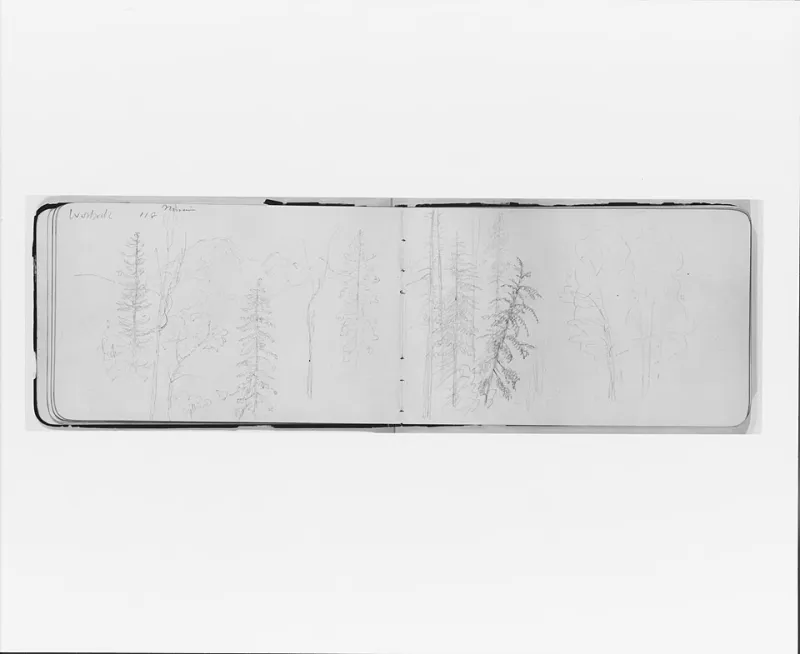
Photo: Albert Bierstadt, CC0, via Wikimedia Commons
Every few months a platform changes something and a small wave of creatives has a very bad week. Reach collapses, a format gets deprecated, an account that took years to build is suddenly worth less than the email list of a part-time newsletter. It happens often enough now that we should probably stop calling it a surprise.
The alternative isn't to ignore the internet. It's to build the sort of portfolio that doesn't depend on anyone's ranking system being kind to you.
The algorithm is not your client
Here's the thing worth saying plainly: no algorithm has ever hired you. People do. A producer, a commissioner, an editor, a creative director with a budget and a deadline — they're all looking for the same reassurance, which is that you can be trusted with something that matters.
Feeds are terrible at communicating that. A grid of finished frames says 'I have good taste'. It doesn't say how you handle a client changing their mind at 4pm on a Thursday, or whether you can hold a schedule when the shoot loses an hour to rain.
Process does say that. Process is the part that doesn't date.
What a process-led portfolio actually looks like
It isn't a studio tour. It's evidence.
For each project worth showing, keep a folder — physical or cloud, doesn't matter — with the awkward artefacts: the first rough sketch, the ridiculously long version nobody chose, the shoot schedule, the two-page rationale you sent on day one, the email where the brief changed. When the project ends, spend twenty minutes turning that folder into something legible.
The result is a portfolio where each entry answers a question a client is quietly asking:
- What was the problem, in plain English, before you got involved?
- What did you actually decide, and what did you talk them out of?
- What constraints were real (budget, deadline, permissions, weather)?
- What did you make, and where has it been seen?
- What would you do differently?
That last one is worth its weight. Admitting a misstep in a case study reads as confidence, not weakness. Nobody believes a portfolio where everything went perfectly.
Case studies beat highlight reels
A showreel is a lovely thing and an increasingly poor argument. Ninety seconds of best bits, all context stripped out, tells a commissioner nothing about whether you can carry a forty-minute documentary or a six-week campaign.
Write it down instead. Aim for 400 to 600 words per project — long enough to show judgement, short enough that a busy producer reads it on a phone. Put the best single image at the top, then the words, then the finished work. Words first, because words are where the reasoning lives.
Practical detail: date everything. A portfolio with no dates on it reads as either brand new or carefully vague. Both are bad.
Own the shopfront
Renting your entire presence to a platform is a business risk dressed up as convenience. The fix isn't dramatic — it's just a bit of admin, done once.
A domain and a proper site. Not because it's nostalgic, but because it's yours. Nothing on tomjobbins.com can be throttled by a product decision made in California.
An email list. Even a modest one. A monthly or quarterly note about what you've made and what you're working on will outlive every feed. Tools like Buttondown, MailerLite or even a plain Mailchimp setup are plenty.
A downloadable PDF or two. Broadcasters, funders and festival programmers still ask for them. A two-page PDF and a one-page project one-sheet makes you look organised in exactly the way that gets you shortlisted.
An archive. Keep the old stuff visible. The thing you made three years ago is often the thing that gets you hired today, and hiding it to keep a 'clean' aesthetic is a slow act of self-sabotage.
UK places worth showing up in
Platforms change. Institutions change more slowly, and slower is fine.
- Film and moving image: BFI NETWORK, Channel 4's writer and director schemes, BBC Writersroom, and the festival circuit — Encounters in Bristol, Glasgow Short Film Festival, London Short Film Festival, Flatpack in Birmingham, Sheffield DocFest. Deadlines shift annually, so check rather than assume.
- Design and advertising: D&AD, Creative Review, It's Nice That, The Dots. On a smaller scale, regional networks and independent studio nights often do more for you than a big award entry — and cost a fraction.
- Documentary and audio: Sheffield DocFest's industry pass, the audio indie scene around the Radiophonic and BBC Audio hubs in Salford and Bristol, and the various regional screen agencies who publish commissioning calls that never make it to the big newsletters.
Pick a handful. Entering everything is a tax on your time. Entering the right three, twice, is a strategy.
The documentation habit
None of this works if it becomes a January panic. Ten minutes at the end of every job, capturing screenshots, exporting files, saving the emails, writing three sentences about what you learned. That's it. The compounding does the rest.
Once a quarter, open the site and fix one thing. Update a date, add a project, delete the weakest entry. A portfolio maintained in small increments stays honest, and honesty is what clients are actually scanning for.
Algorithms will keep changing. That's not a problem you can solve, and it's not really your job. Your job is to make good work and be able to explain, clearly and with evidence, why it was good. Do that and the next ranking change becomes somebody else's bad week.